


Tips and tools for building your childs positivity:
Colour Carnival
Many of the schools we are working with support us with our colour carnival fundraising event, to raise awareness of positive mental health and fundraise for our charity. The whole school celebrates and learns about we can look after our mental health and build positivity. All money raised goes directly to support the work that Heads Up Kids carries out in schools, providing social and emotional wellbeing programmes to primary school aged children at no cost.
Heads Up Kids are committed to raising a generation of children with a positive attitude towards mental health.
Here are some of our top tips and tools for building your child’s positivity at home.
CONNECTION
It’s been scientifically proven that feeling connected to others helps us to feel good. Connections – our friendships and relationships with the people around us – make us feel safe, secure and good about ourselves.
Everybody is different:
We are all different, and when we acknowledge and celebrate our differences and uniqueness, we help children to feel accepted for who they are. This in turn this builds self-esteem.
Your relationship with your child:
A child’s relationship with their parent or caregiver is central to how they feel about themselves. Delight in your child, let them know that you enjoy being around them and find the small moments to talk and share.
Friendships:
Our connections with others are vital to our emotional wellbeing. When we have positive connections we feel safe, supported and good about ourselves. We can encourage healthy relationships by helping children to notice what makes a good friendship, and helping them to understand that all friendships have ups and downs. We all fall out with our friends at times – adults too. It’s important to support children to work out their own friendship difficulties first before stepping in to manage the difficulty for them.

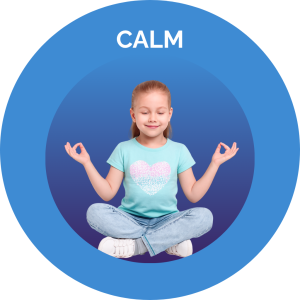
CALM
Calm- means feeling peaceful and relaxed. When you are calm, your body feels still and your mind feels quiet. When we have big feelings, we can all find ways to help us to calm down.
Calming strategies:
We are all different and its helpful for us to identify what works for us to calm down. Talk to your child about the ways that help you to calm down and what might help them. Do they need some time out, a walk, a cuddle, count to 10 three times for example.
Calm activities:
Modern life can leave children feeling rushed and over-stimulated, try to find time for quiet, calm activities that don’t use screens.
POSITIVITY
Positivity is about how we think. When things are difficult, focusing on the good things can help us to feel better.
A positive outlook:
Help your child to find things that they love and enjoy and talk about the importance these activities have in supporting us to feel positive day-to-day. Remind children that we are all different and we all have different things that we love to do.
Try to praise children’s effort or joy rather than the achievement or result. When we praise the effort or joy we help a child to feel seen and appreciated. It’s helpful to share the things that you love and enjoy with your child.
Positive thinking:
Some children are predisposed to be more positive than others. However, all children can be supported to develop positive thinking. This could mean helping them to reframe their thinking when they are being overly negative or self-critical. We can reframe by helping them focus on the positives and gently challenging negative assumptions. Like most things, the more we practise positive thinking, the easier it becomes.
RESILIENCE
Resilience – Resilience means bouncing back when things don’t go the way we hoped and being able to use what we have learned to help us next time.
Building independence:
It’s helpful to give children more options and choices. When we do this it helps to teach them to make decisions, trust their judgements and value their wants and wishes. Encouraging children to do things for themselves and take on responsibilities can help them feel capable, confident and independent. Too often we do the things that our children can easily do themselves because we are rushed and don’t have time , or think we can do it better or don’t have the time to teach them how to do it.
Helping children ‘bounce back’:
Normalise failure – share your own examples of things that you had to try over and over again before mastering. Remind them of the things that they couldn’t do before and now can and how much they needed to practise to get it right.
Trust your child’s judgement – if we jump in too quickly when things are difficult, we limit their ability to not only trust themselves but also to build their resilience.
Create familiar routines and boundaries – these help children to feel safe and secure, this in turn helps them to try new things and manage when things don’t go to plan.
Our mental health is just like our physical health
It’s important for children to understand that we need to look after our mental health in the same way as we look after our physical health, we eat healthy foods, get enough sleep and exercise. We don’t have positive mental health all of the time. Sometimes we struggle with our thoughts and feelings. We might feel like we are stuck with a feeling that won’t go away or that we can’t stop thinking about the things that worry us. At times like this it is really important that children can tell a trusted adult how they are feeling. This is something that you can talk to your child about.
If you didn’t get a chance to make your donation on Colour Carnival day at your school you can still DONATE by clicking here